

We Asked A Veterinarian Which Dog Breeds Are Most Prone To Health Issues & What Owners Should Watch For
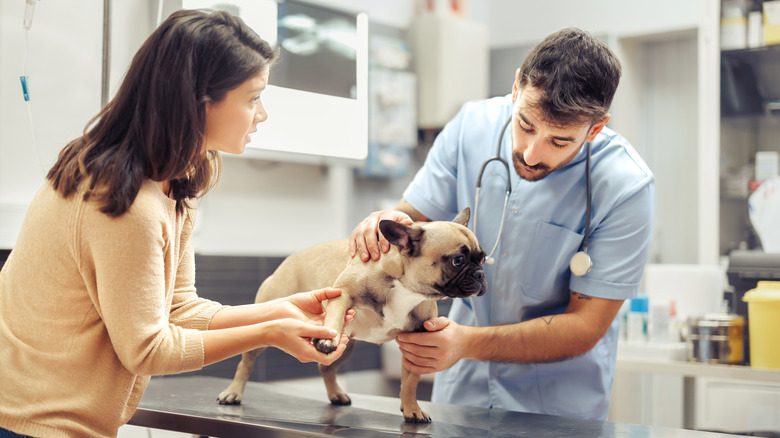
No one can look into the future and predict with certainty the health issues that a pet will develop over the course of a lifetime. That said, certain dog breeds are more likely to get certain medical conditions. It can be useful for you, as an owner or potential owner, to know which expensive vet bills a given dog breed might incur, so you can try to avoid having to figure out what to do with a vet bill you can't afford, and also to help you decide if you should get pet insurance.
We asked Dr. Courtney Deer, an ER veterinarian and Instagram star in Arizona, about the dog breeds that often develop health conditions, how to assess if a breeder is taking care to avoid medical problems in their dogs, and what an owner should watch for in their own pet. Speaking exclusively with Cuteness, Dr. Deer shares, "The French Bulldog is one of the most notorious breeds for health issues!"
Dr. Deer also gives us some practical advice for every potential dog owner. "Before buying any breed of dog, it's important to do as much research as possible!" she says. "Every dog breed has some disease correlated with it, so it's important to be aware of them and know what to look out for."
The many problems with French bulldogs

Why is the French bulldog at the top of Dr. Courtney Deer's list? "Their short snouts, small nostrils, extra tissue in the back of their throat, and small tracheas make them very prone to heat exhaustion. Respiratory issues are very common in this breed. Many also have GI issues, such as food intolerances, allergies, or regurgitation," she tells Cuteness, adding that a lot of these dogs also develop Intervertebral Disc Disease (IVDD). "French bulldogs have replaced dachshunds as the most common breed seen in neurology departments. They tend to have back issues earlier in life and have worse outcomes than other breeds."
French bulldogs and dachshunds aren't the only dog breeds at high risk of developing IVDD — basset hounds and shih-tzus are also chondrodystrophic. "This means they are longer than they are tall, which can predispose them to their back issues," Dr. Deer says. She advises owners to be on the lookout for the symptoms of IVDD: general pain, weakness in the dog's back legs, or paralysis.
When it comes to respiratory issues, brachycephalic dogs — those with broad, short skulls — such as pugs and French bulldogs, often develop such problems. According to Dr. Deer, "Other 'smoosh-faced' dogs, like the Pekingese or boxer, have the potential to develop these issues because of their face shape." Warning signs an owner should watch for include excessive panting, weakness, and the dog's gums or tongue turning either purple or blue.
The importance of a good breeder
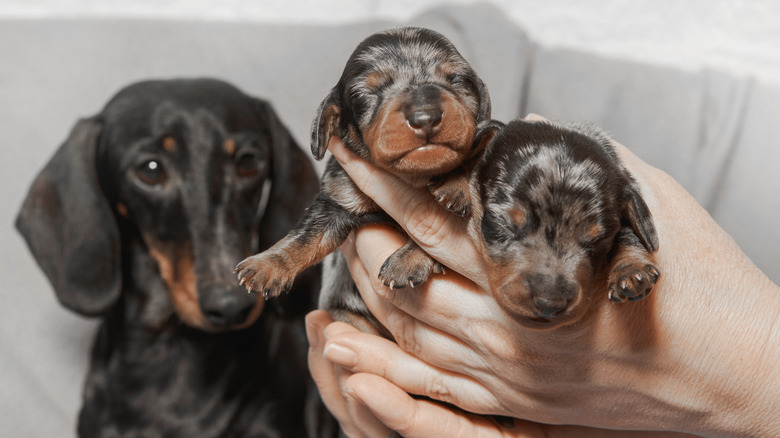
Many health problems can be avoided by buying your dog from a reputable breeder, one who does all of the proper health testing and keeps meticulous records. "Ask to see the parents of the puppy you want to purchase, to ensure they don't have any of these issues," Dr. Courtney Deer advises us. "Good breeders are forthcoming with this information!"
Of course, when it comes to adopting a mixed-breed dog with an unknown background, it can be challenging to predict what health issues could arise in the future. "Sometimes, it's obvious what a dog is mixed with, other times, it's impossible to guess," Dr. Deer says. She says you should always trust your gut if you suspect your dog — of whatever breed or mixed breed — has developed a medical condition. "You spend all day with your pet, and you know if something is off," she points out. "Don't be afraid to take them to the vet if you're worried." Even if your pet is one of these issue-prone breeds, that advice can go a long way in ensuring they live a long, happy, and healthy life.