

Australian Shepherd With No Concept Of Personal Space Hilariously Stares At Mom All Day Long
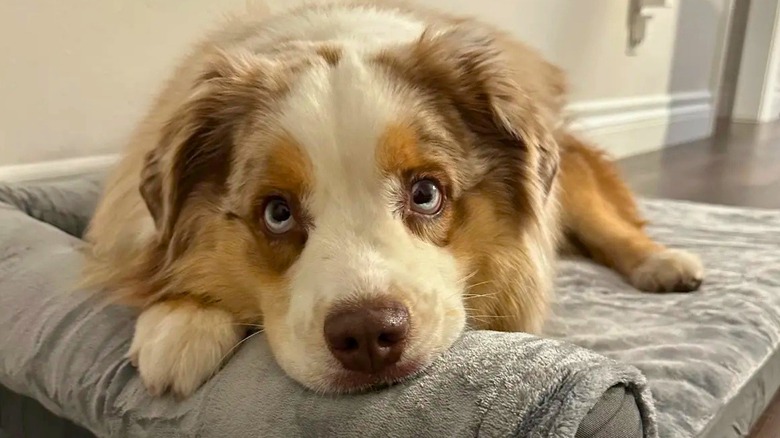
Our dogs really do love us! It's true; years of scientific research by animal behaviorists prove canines are capable of developing truly loving bonds with their humans, which may come as no surprise to pet parents. That's because our fur babies show us love in sometimes funny ways all the time, like in this Instagram video, where an especially clingy Australian shepherd hilariously stares at his mom all day long.
Sure, Moose may not understand personal space, but he sure is a cutie! No one seems to know this more than his loving pet parent, who captured this stage-five-clinger on camera. The Instagrammer notes that Moose's typical day involves a whole lot of staring at their human, pawing at them for attention, and chasing around his own fur balls. Sounds like a packed day to us!
"My Aussie, Enzo, is the same way," said one viewer in the comments. Others cracked up at Moose's sheer commitment to his daily routine, saying, "He's got a schedule, and he's stickin' to it." Well, we fully support this goofball's favorite pastimes, though he could probably learn a bit about personal space sometime soon for his human's sake.
Defining a Velcro dog
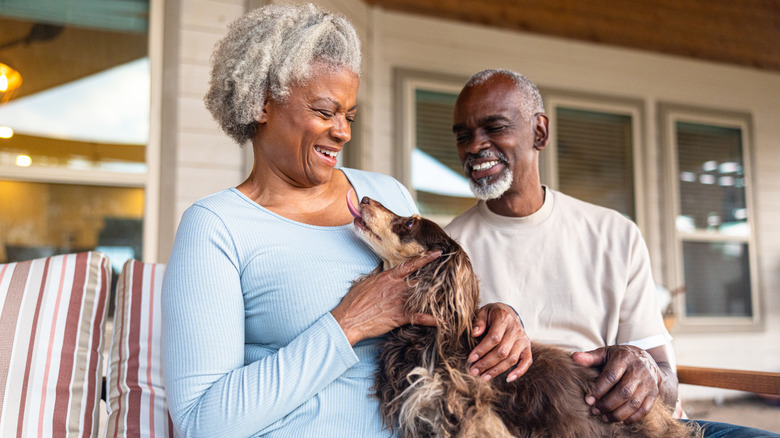
When it comes to dogs loving their favorite person, Moose is an absolute pro. But Moose's clinginess can also make him a "Velcro" dog. So, is it okay for a pup to be a Velcro dog, and when does it become a problem? The main difference between a harmless Velcro dog and a dog who has separation anxiety is how they act when their human is away.
Both Velcro dogs and dogs with separation anxiety may follow you around everywhere, and even stare at you intensely, like Moose. However, separation anxiety is a behavioral condition that causes unwanted actions like frequent barking and howling, accidents in the house, and destructive chewing. While Velcro dogs can be more likely to develop separation anxiety, you can absolutely have a healthy and clingy pup at the same time; it might just take some extra training.
The best way to avoid separation anxiety is by helping your dog develop confidence and create healthier boundaries, which can be taught with proper counterconditioning and desensitization. Desensitization will require you to leave your dog alone more regularly, while counterconditioning helps your pup associate being alone with positive things, like treat time. Keep in mind, it might be helpful to see a professional dog trainer if you find your Velcro dog having a hard time. With time and care, your pup will be comfortable with being alone, even if their favorite pastime is spending time with you.