

Newfoundland Siblings Look Just Like Teddy Bears While Walking With Their Mini-Mes
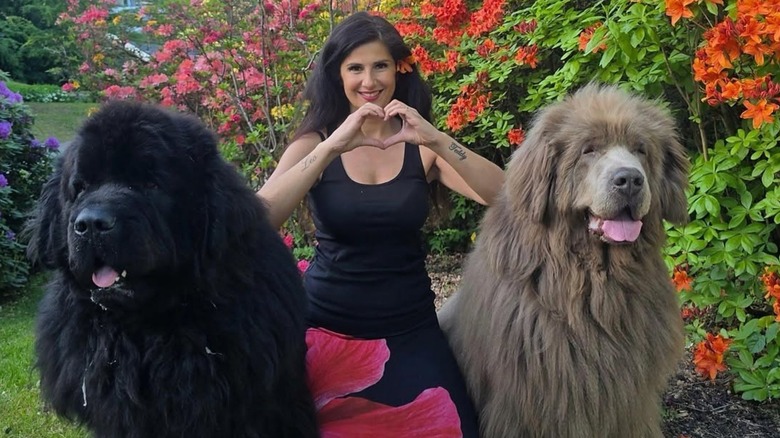
Some dogs look way more like their wild ancestors than others. See Siberian huskies, for instance, who closely resemble wolves but are definitely domesticated canines. Then, there are those dogs that don't look like dogs at all, but bears! One popular Instagram video showcases two dogs who look like bears in disguise. Yet, we can confirm these teddies are actually Newfoundland siblings who love to carry around their adorable mini-mes on walks. See for yourself.
Teddy and his brother Leo are Newfoundland dogs, a breed that can get up to 150 pounds. It's no wonder the duo look like two baby bears on their morning walk. An adult female bear weighs about the same, while male bears can get up to 275 pounds. Perhaps the cutest part of these brothers' stroll, however, is the little stuffies they like to walk with, that happen to be little versions of themselves. Unsurprisingly, the stuffies look just as teddy bear-ish as the dogs do.
According to their Instagrams (they both have their own pages), Teddy and Leo spend a lot of their time outside in their woodsy terrain and near fresh water, just like bears do. When not exploring the great outdoors, these gentle giants enjoy relaxing with their mom or grandma. In fact, the two "go crazy" at the mere mention of "Nana," according to a Cuddle Buddies video about their special bond. They may not be bears, but we sure want to cuddle them!
The mysterious and heroic history of Newfoundland dogs
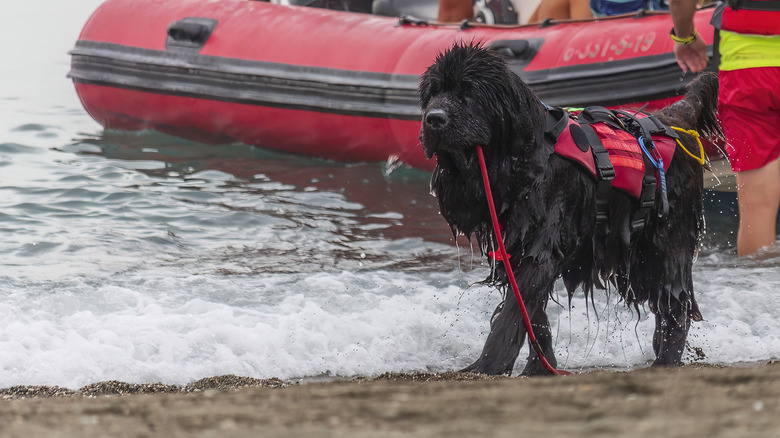
Teddy and Leo may love the forest, but just like many of their breed, they also love the water. Newfoundland dogs have webbed feet, double coats, and are typically wonderful swimmers, and once you understand the history of this breed, you'll see why. So let's dive into the history of one of the friendliest dog breeds around.
As their name suggests, these dogs come from the island of Newfoundland, the easternmost province of Canada. Oddly, however, their exact history isn't known. One theory suggests they came from black bear dogs, originally brought to Newfoundland by the Vikings in 1000 A.D. Another claims that maybe they evolved from American black wolves. A third theory posits that maybe Newfoundland dogs developed from interbreeding of European dogs brought over by explorers in the 15th and 16th centuries.
Though their exact origins are a mystery, the Newfoundland dog's history of heroism is not. These canines have long been known to be among the most likely to save you during an emergency — especially an aquatic one. In earlier history, Newfs often assisted Canadian fishermen in major water rescues. Today, the breed still works as rescue dogs on both Italian and French beaches.