

Griffon With Dwarfism Loves Her Own 'Voice' — But It's Not Nearly As Scary As She Thinks
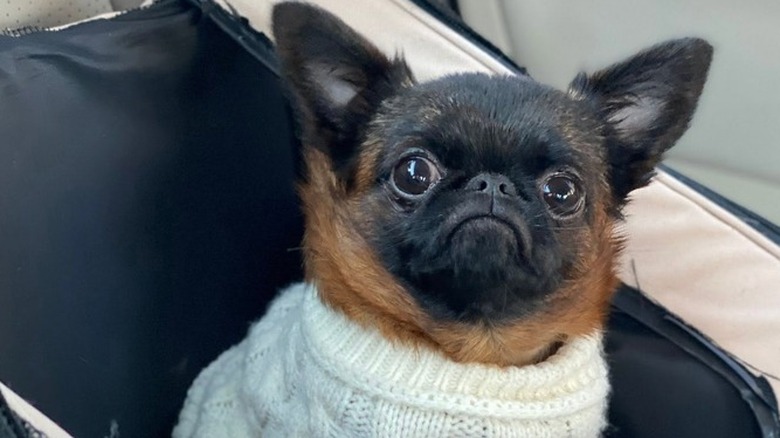
When it comes to dogs, sometimes the littlest ones are the toughest. But just because some miniature dogs feel quite fierce doesn't mean they're successfully intimidating. In a popular Instagram video, one Brussels Griffon with dwarfism attempts a terrifying bark, but in an adorably funny turn of events, said bark feels a lot more "cute" than brute.
Dottie has something to say, and it's fierce! The little Griffon immediately barks at the start of the video, and though we don't know what she's saying, she seems pretty serious. According to her owner, she "loves the sound of her own voice." We do too, but perhaps not for the same reasons. It doesn't help that this cutie is surrounded by various little plush toys that happen to be almost just her size, adding to the adorableness.
According to Dottie's website, she was born in May of 2019 in New Zealand with canine dwarfism and several other medical conditions. She's just about half the size of an average-sized Brussels Griffon at just around 4 to 4.5 pounds and 6 inches tall. However, that doesn't stop this tough pup. Since joining Instagram in 2020, her profile's been a place to show her having fun, offer medical updates, and educate people on canine dwarfism.
More about dogs with dwarfism
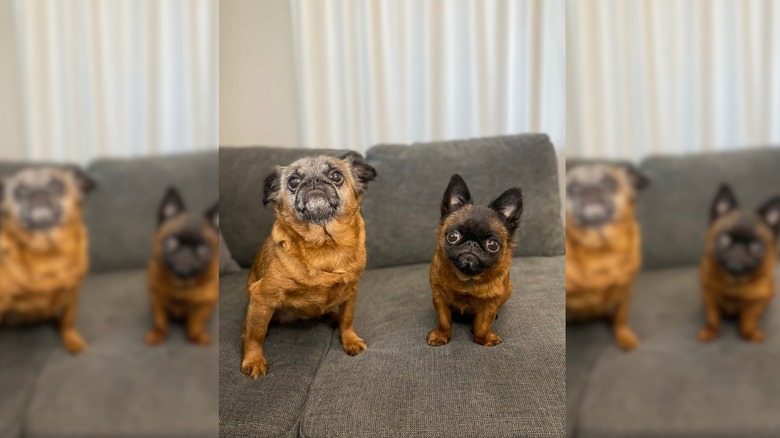
While they can overlap and look similar, small dog breeds and canine dwarfism are different. Canine dwarfism is a genetic condition that causes typically more disproportionate, shorter bodies with bowed limbs and larger heads." There are two types of dwarfism. Dottie has the most common kind (also found in humans), called achondroplasia; the other is called pituitary dwarfism. Let's learn about both and how to care for dogs with dwarfism.
Achondroplasia is caused by a genetic mutation that affects growth receptors called fibroblasts. Though Dottie wasn't, some cute small dog breeds like dachshunds, bulldogs, and corgis have been selectively bred to have achondroplasia. Also called chondrodysplasia or osteochondrodysplasia, most dogs can live totally healthy lives with this kind of dwarfism. However, they may deal with some spine issues, so be sure to visit the vet regularly and keep them in tip-top shape. (Here are genius ways to work out with your dog, for a few ideas.)
Pituitary dwarfism is a lot rarer than achondroplasia, and also comes with more health issues. Dogs with pituitary dwarfism have underdeveloped pituitary glands, which can lead to both small stature as well as underdeveloped kidneys, thyroid issues, and sterility. Without ongoing treatment and extra care, dogs with pituitary dwarfism typically have a shorter lifespan than their counterparts. But that doesn't mean you shouldn't adopt them. Adopting dogs with special needs can be very rewarding for those who can handle the medical expenses, as you get to see your fur baby thrive in ways they otherwise may not have been able to.