

Things You Do At Night That Break Your Dog's Heart
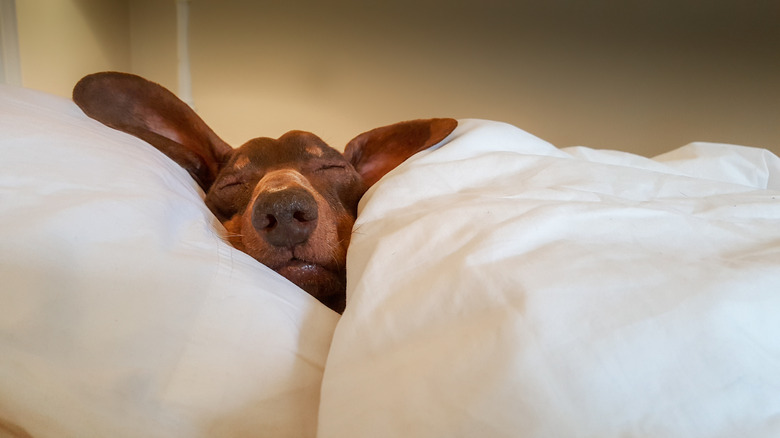
The stars are shining, you're winding down, and Fido just did his evening stretch. It's nighttime, and that can mean a lot of different things for dog parents around the world. Rural pet parents, or those with giant backyards, may allow their pup one last lap outdoors before bedtime. City parents and apartment dwellers might go for a final poop break with their dogs before bed.
Actual resting time can vary, too. Instead of more typical resting spots like, say, a dog bed, yours may be more like this maltipoo who turns her mom's head into her personal pillow every night. Whatever your dog's routine, they deserve a wonderful night's rest.
Some pet parents get it just right (like this Goldendoodle mom whose pup's bedtime routine is total self-care goals). However, despite your best efforts, you can still upset your dog in the evening hours. Thankfully, Cuteness spoke exclusively with Russell Hartstein, a certified dog behaviorist who offers dog training services in Los Angeles, to discover some of the biggest nighttime no-gos — so you can avoid breaking your dog's heart.
You're hanging out with other pets
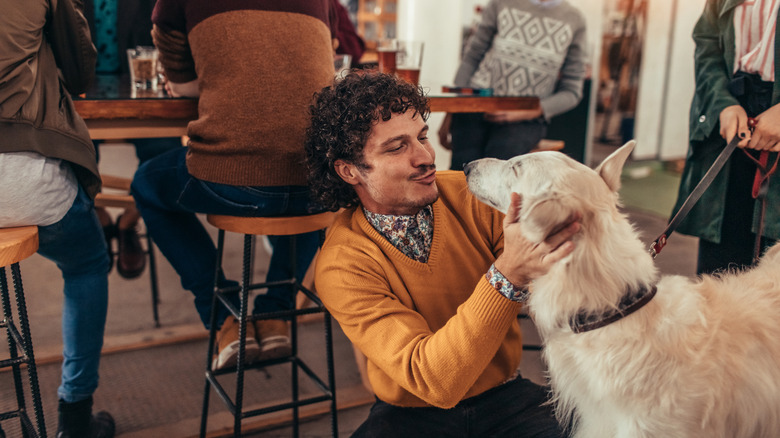
Nighttime outings with friends can be a blast, but don't be surprised if your dog has some questions when you return. Russell Hartstein notes that even hugging a friend can cause some "scent swapping." If that friend has a pet, there's even more to consider. "You might notice your dog or cat sniffing you intensely when you come home after you've petted another person's dogs or cats."
He explains that any of these mysterious smells "can definitely be upsetting to a dog" for a couple of reasons. For one, you might temporarily smell like a stranger to your dog. "When you smell like another person, or someone else's pets, your very own pet might not recognize you for a while," says Hartstein. This can be pretty rough for canines, whose noses are how they explore and understand the world around them.
Of the many unexpected things researchers suspect dogs can smell that humans can't, who you've recently been in contact with is one of them. Hartstein says this can pose a problem for especially territorial dogs who may become reactive towards you. Dogs learn a lot from chemicals called pheromones, including whether the dog they smell on you was a threat. Letting your dog get a good sniff means it can discover what's up and then, hopefully, wind down for bed.
You're interrupting your dog's rest
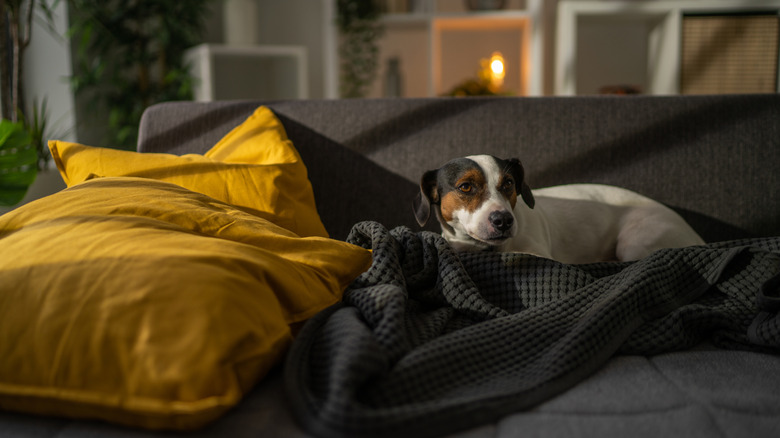
Whether human or dog, sleep matters — and not just any sleep either. When it comes to dogs and rest, Russell Hartstein urges parents to hold true to the phrase "let sleeping dogs lie."
"A cardinal rule about being a pet parent is to never wake your dog up abruptly, or disturb them when they're sleeping," shares Hartstein. There's a very good reason for this. If your dog is whimpering, twitching, or even quietly barking during sleep, it's likely in the deepest phase of a rest cycle called rapid eye movement (REM) sleep. This is where dreams happen, and also when their bodies and brains recover from the day.
Accidental interruptions also exist. Children who are active around your dog's bedtime may potentially wake it if they are not careful, for example. That's why Hartstein says it's "especially important to teach this to children." When everyone's on the same page, it's much easier to get through the night without a hitch.
You've changed your dog's nighttime schedule
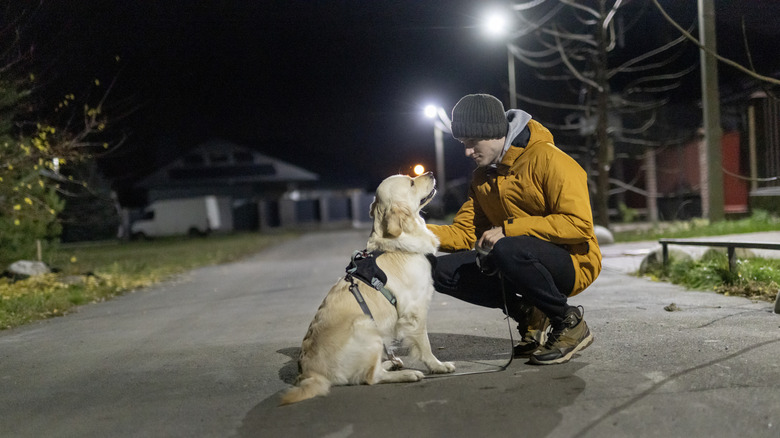
"You might notice when we turn the clocks backwards or forwards for daylight saving time that your dog still wants to get fed and/or walked at the same time as before we changed the clocks. The same goes for when we retire for the night," says Hartstein. This is because dogs have a thing called a circadian rhythm, which is an internal clock that helps dogs understand their lives in relation to time. Predictability for dogs keeps their internal clocks accurate, which can help them feel safe and secure.
Sudden shifts can have the opposite effect. As Hartstein explains, "Dogs thrive on routine, so when we alter that routine significantly, pets can be disturbed or become frustrated." Plenty of pet parents get it right, luckily — like this mini dachshund's evening routine that is total bedtime goals,
This advice might also be useful info to one future poodle parent on Reddit. The owner asked how best to fit a new puppy into their busy routine when they restarted school. Helpful commenters were clear in their response: consistency is key. One Redditor urged the poodle parent to schedule designated naps during the times they'd be at school — so that their routine was consistent for them.
You (or elements outside your control) are too loud
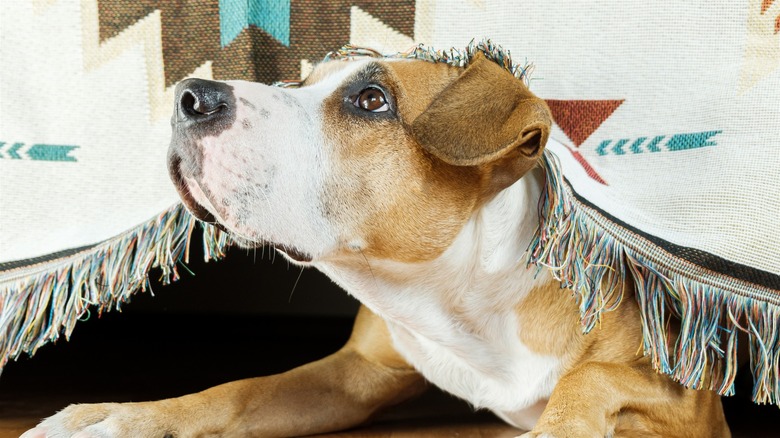
You may know the common refrain that dogs hate thunderstorms. Well, they likely aren't big fans of other noisy sounds either, for the same reason. "Loud noises in general can set off a dog and disturb them at night. Whether it's thunder, lightning, rain, or hail hitting the house. All of these can be upsetting to a dog," says Hartstein.
Loud noises can be disturbing for both waking and sleeping dogs. The latter can lead to interrupted REM sleep, and the former may activate anxiety in your dog right before bed, which can make sleeping way more difficult. In a 2020 Scientific Reports study of 13,700 Finnish pet dogs, researchers found that noise fear was the most common form of canine anxiety. However, some dogs are more prone to noise phobia, depending on the dog's past exposure and genetics.
To be clear, noise phobia and noise aversion are not quite the same. An aversion may mean your dog is simply uncomfortable with the sound, whereas a phobia can lead your dog to panic. Both can be remedied with the right desensitization and counterconditioning. This sort of training safely exposes your dog to lower levels of the same noise to desensitize them over time. A Redditor explained how they went about it: "I make noise and go about it as though it's normal, therefore my girl sees no reaction. Therefore, she doesn't have to."