

Golden Retriever Puppy With Rare 'Birthmark' Looks Just Like A Chocolate Chip Cookie
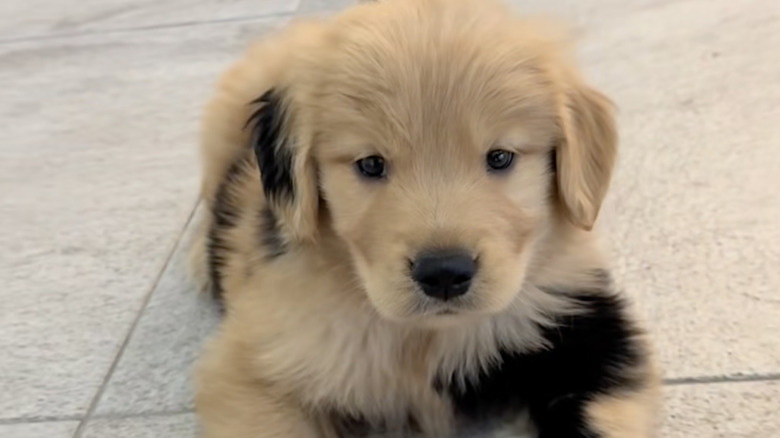
Ever heard of the term "cuteness aggression," where people sometimes get so overcome by the sheer cuteness of something that they feel the urge to harmlessly squeeze or even bite the thing they find so adorable, like a puppy? Well, hold onto your hats if you've never experienced it yourself, as this chocolate chip cookie-looking pup from TikTok may just send you over the edge!
@berniethegoldenr Don't let the face fool you 🐾 #newpuppy #goldenretriever #goldenretrieverlife #dogsoftiktok
The video features what the content creator has said is a golden retriever puppy with a rare genetic birthmark that makes its fluffy yellow coat have spots of chocolate brown. The clip shows the darling little doggy named Bernie at first looking calm, and then running off to cause mischief by nipping and play-fighting.
In the comments, there's some debate about just how this coloring happened, and there's a whole lot of discussion of what kind of delicious dessert he most resembles, from chocolate-vanilla soft serve swirl to marble cake —but chocolate chip cookie seems to be the winner. Whatever he is, sign us up for a slice of heaven!
How coat mutations in puppies happen
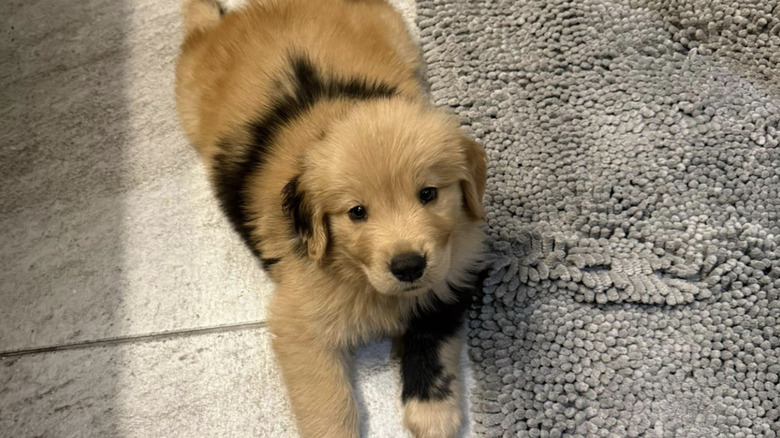
When it comes to Bernie the chocolate chip cookie-looking golden retriever in the TikTok video, his coloring is most likely due to a genetic mutation that causes discoloration called a somatic mosaicism that resembles a birthmark that grows unique fur patches. In this instance, the mutation is non-inheritable and cannot be recreated on purpose through breeding.
However, other gene mutations in dogs can be passed on. One example is when a usually sleek, short-haired breed is born with a long, fluffy coat, a la this fluffy French bulldog having a soft coat. This kind of trait, which is growing in popularity with breeders and can happen with almost any short-haired dog breed, occurs when both of the pup's parents carry a recessive long-hair gene, which is technically a mutation of the gene that regulates hair growth. Another similar example is when there's a hidden recessive piebald gene, which results in tri-colored spotted puppies, such as this rare Biewer terrier pup that's a result of two purebred Yorkshire terriers each carrying the color mutation.
Sometimes, when these types of genes are hidden, two short-haired parents or two non-piebalds can unexpectedly create long-haired puppies or piebald puppies, respectively, if they are both carriers of the needed mutation. And, of course, two dogs who are obvious carriers of these genes will create pups like them. In the end, they're always 100% loveable!