

Senior Golden Retriever's Unique White Facial Fur Will Make You Do A Double Take
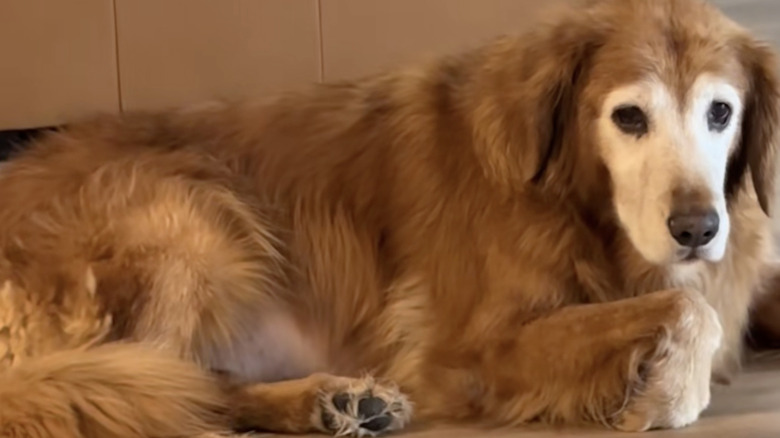
Like people, dogs start to go a little gray as they inevitably age, with lots of senior pups still living their best lives getting a dusting of lighter hair around their eyes, muzzle, and neck — sometimes affectionately called "sugar face." It's nicknamed this because it appears as if they got into some powdered sugar or white frosting as a sweet treat. The aging look is no different for this precious senior golden retriever whose facial fur has changed over the years; only the unique shape of this pup's white fur might just make you do a double-take at what it resembles.
@tails_allyandbeau Ally Girl started getting her sugar face at age 7. She has always had so much love to give and wanted to wear it on her face. Now at almost 13 she has a perfect heart shape 💟🥰 #goldenretrieverlife #souldog
The adorable 13-year-old dog is seen in the video looking straight at the camera, as the white outline on her face is noticeably in the shape of a heart. "Ally girl is such a lover, she even wears her heart on her face," notes the caption, adding that they see the near-perfect shape as an extension of her super-sweet personality. "Most special sugar face 💛☺️🧡," said one watcher, and it really is such a special sight to see!
Why does dog fur turn gray?
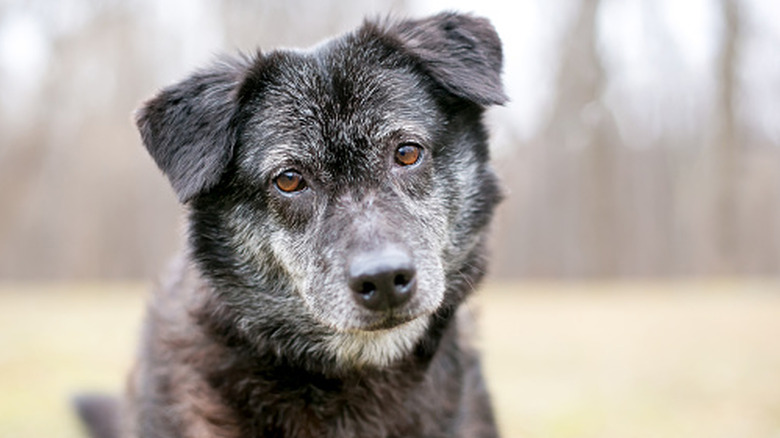
Like humans, the aging process affects pets too, most notably when they get sick, slow down, or get a head of gray hair. Of course, it's a slow process that often sneaks up on us pet owners. One day, your chocolate lab's all-brown face looks a little different, and you may notice some gray hairs above their eyes and under their chin, which eventually start taking over their whole face.
What primarily causes a dog's hair to turn white is the natural loss of the pigment called melanin, which causes hair follicles to change over the years to grow only white or gray hairs. While it's mainly due to unavoidable natural aging, it can also occur because of genetics, medical conditions, or stress/anxiety. In general, though, don't panic if you notice your dog going gray, but do take the time to love them unconditionally, as animals age faster than humans, making their time with us unfortunately much shorter than we'd all surely like.