

Fishing Cats Are One Of The Rare Feline Species That Thrive In The Water - What To Know About Them
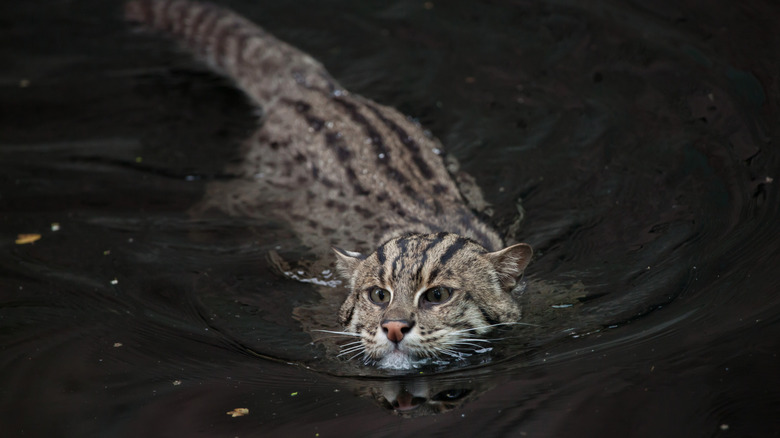
They say cats aren't big fans of water, and there are plenty of reasons this may be true for some. For one, domestic cats might feel weighed down by water as their fur is far more absorbent than a dog's. But before you think all cats really hate water, get ready to learn about the rare wild feline species called fishing cats. Fishing cats (or more scientifically, Prionailurus viverrinus) thrive around water and in wetlands including marshes and swamps.
Officially from southern Asia in countries like Sri Lanka, Bangladesh, Cambodia, and Thailand, fishing cats are basically made for aquatic life. For one, they have partially webbed toes and protruding claws that both help them catch prey and navigate muddy land. These small wild cats are great swimmers, with super cute faces and distinct stripes and spots that help them blend into their surroundings. So, enjoy this round-up of facts about these interesting wild felines!
They're on the larger side of small
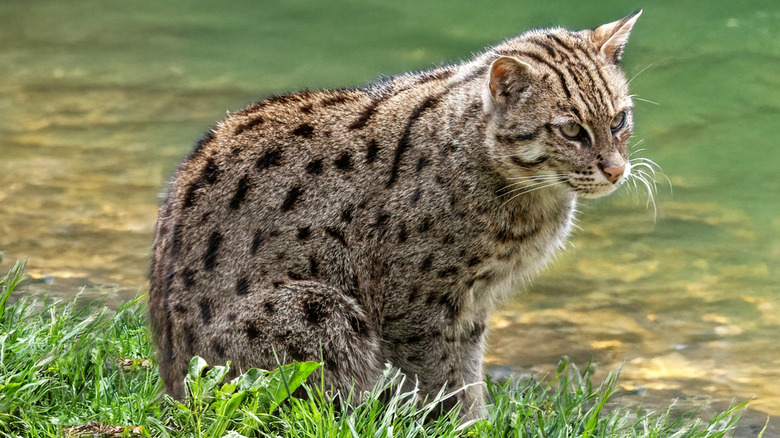
Did you know that most wild cats are pretty small? It's true, small wild cats make up about 80% of the group, and many are no larger than your average house cat (via A-Z Animals). In fact, the most lethal cat breed in the world is deceptively cute and tiny. Fishing cats actually run on the larger side of small. Female fishing cats can get up to 20 pounds, while some males can be as large as 30 or so pounds. For reference, domestic cats are typically no bigger than about 20 pounds.
They are very skilled hunters of fish and other prey
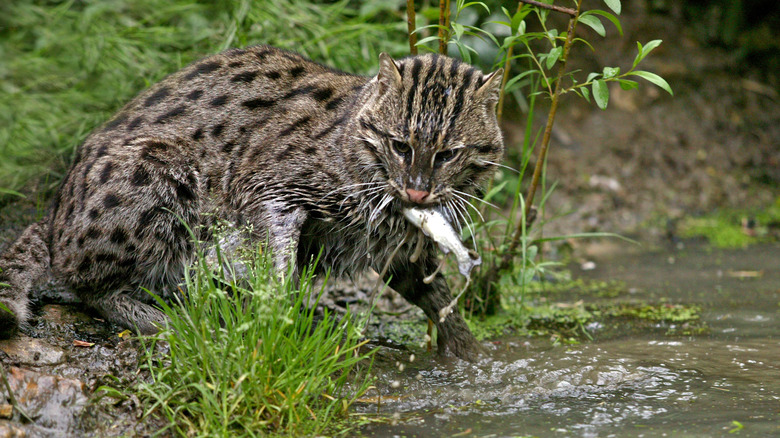
Fun fact: a carnivorous animal that mainly eats fish is called a piscivore. Fishing cats are definitely piscivores, with clever fishing tactics to boot. Mostly nocturnal, these agile felines can dive to catch their prey and even scoop up fish with their paws. But believe it or not, fish aren't the only prey they hunt. They've also been known to eat small rodents on occasion, as well as crabs, frogs, and even some bird species.
They learn by example
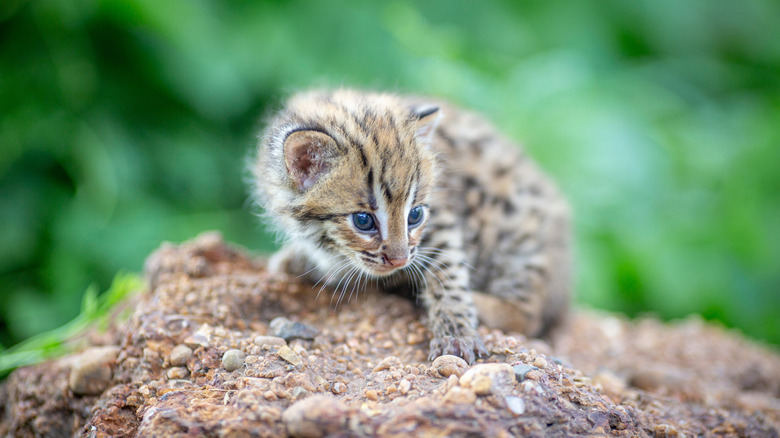
Fishing cats may be smart predators, but they aren't born that way. Kittens learn how to fish, swim, and catch their prey by watching their mothers as early as a month old. Mother cats raise their young without help from the male; he doesn't stay around once breeding time is over. Luckily, mom is all that's needed to help the kittens learn. After some trial and error, young fishing cats are typically ready to hunt on their own before they turn one.
They're very mysterious and elusive animals
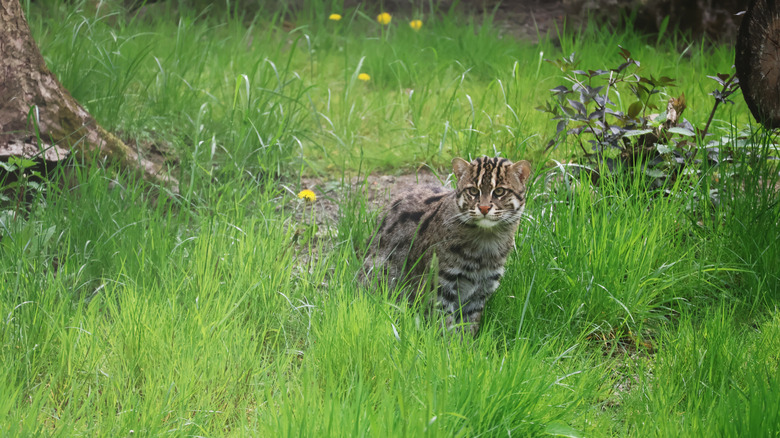
As lone hunters, often seen by themselves, fishing cats are said to be rather solitary creatures for most of their lives. Typically born two to a litter, once kittens grow old enough to hunt on their own, they seem to go their separate ways. Unfortunately, though, we don't know too much about their social lives. Since fishing cats are rarely spotted in the wild, experts are still learning exactly how fishing cats interact when not raising their young.
They're related to leopards
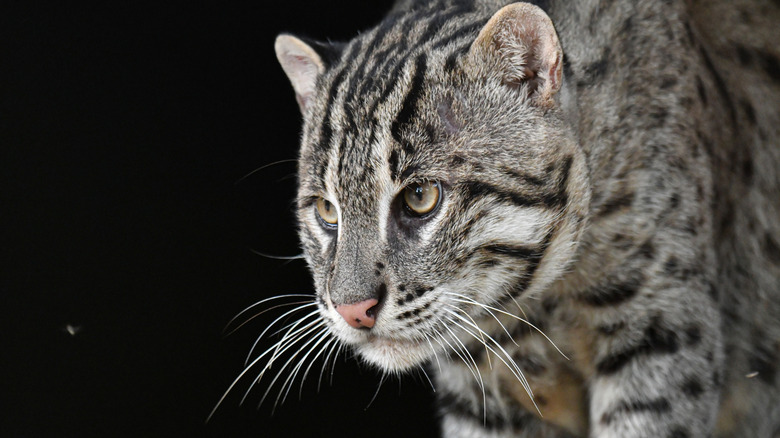
If a fishing cat's unique spots and stripes seem familiar to you, you're not alone. These swimming felines are distant relatives of leopards and are often confused for leopards today. Fishing cats likely evolved from leopards almost six million years ago, but the two still share many similarities, including their hunting instincts, health requirements, and, of course, their look. Recent reports show fishing cats being mistaken for leopards and captured for their skin; a practice that is currently endangering leopards.
They are endangered
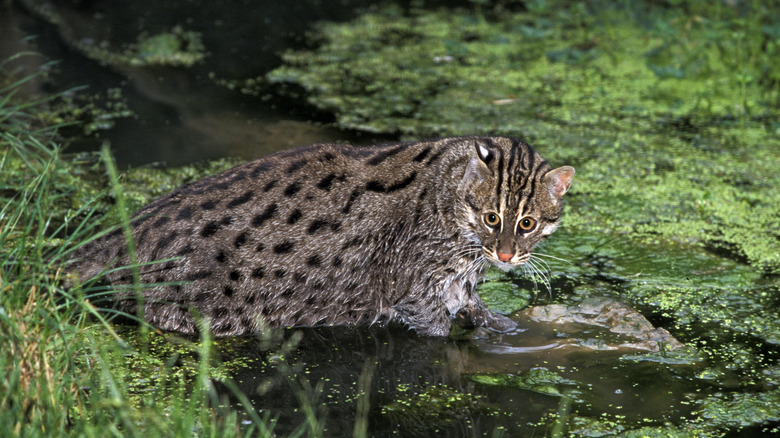
Fishing cats are considered vulnerable according to the International Union for Conservation of Nature (IUCN) and endangered in both Bangladesh and Nepal. Their population has heavily declined in recent years because of disappearing wetlands due to human-made pollution, over-harvesting, and climate change. It's even led them to creep into urban life, like in recent Sri Lankan reports. Conservationists continue to combat these changes with research, rescue, and raising awareness. So, we're hoping these cats join the list of amazing animals that survived near-extinction and made a comeback.