

Meet Jimothy, The Viral 'Mutant' Raccoon Taking Seattle By Storm
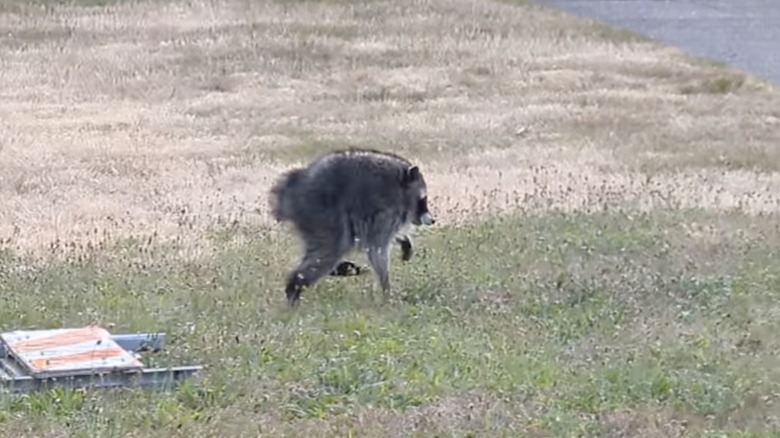
Sometimes, wild animals go viral. In 2026 alone, there have been social media obsessions over the sad captive monkey named Punch and, of course, the chaos-causing Neil the seal. Now, it's time for Jimothy the "mutant" raccoon to steal the spotlight, becoming the internet's latest obsession with unusual wildlife encounters (a la this dog coming face-to-face with humpback whales). Of course, this raccoon isn't really a mutant, most likely born with short spine syndrome, but that hasn't stopped it from becoming a local celebrity in Seattle.
"What am I looking at?!" asked the content creator of the viral Instagram video that seemingly first named the raccoon Jimothy, as she filmed the short-bodied, long-legged raccoon with no tail scurrying across a lawn. "For our 13th anniversary, @ehhbahnan and I were graced with the presence of Jimothy the raccoon with short spine syndrome. Praise Jimothy!! 🦝," the post continues.
Within days of the post, the story and images of Jimothy were everywhere, leaving people in the comments section to call for the animal's safety and well-being. "Protect him at all costs 😍," one person said, as another wrote, "Honestly I hope he goes to a sanctuary... with this going [viral] unless he is protected by the neighbors I just don't feel good about this lil guy [wandering]😢❤️." We couldn't agree more: Long live Jimothy!
What is short spine syndrome?
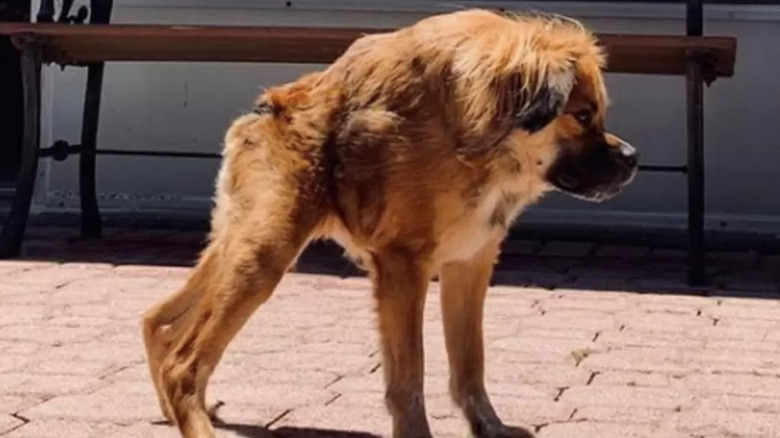
Short spine syndrome is a rare birth defect in animals that affects the development of the spine when several vertebrae fuse together, leaving the spine much shorter than usual. Animals with the condition typically have little or no visible neck, a hunched back, and a compact body, while their head and legs often remain normal in size. Many also have a short or missing tail, fewer ribs, and a distinctive bouncing gait.
Because their spine is fused and rigid, they often can't turn their heads and may have trouble grooming or bending down. Researchers believe the condition is linked to a very rare genetic mutation, with most documented cases appearing in dogs.
While there's no cure, many animals with short spine syndrome enjoy happy, active lives, especially in domesticated or captive animals with the right care. When it comes to friendly wild animals, though, the condition can prove much harder to overcome, making a documented case like Jimothy a remarkable reminder of just how adaptable some animals can be.