

Raccoon-Like Street Cat Goes From 'Neighborhood Legend' To His Forever Home
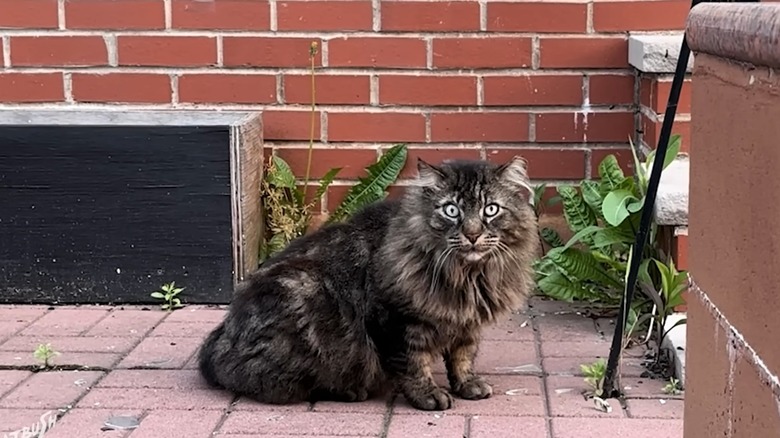
Can a long-time street cat get a second chance at domestic life? The true-tail of neighborhood legend, Daddy-O, may answer that question. This "tail-less" stray cat ruled his Brooklyn block for years, often dodging traps and outsmarting fellow felines for extra food. That is, until the community came together to help him find his new forever home.
At first, many assumed Daddy-O was a raccoon at night due to his extra fluffy fur and large eyes. After looking at these adorable raccoons, there is some resemblance. But Daddy-O is, in fact, a cat — and a clever one at that. So clever that over the years he became "the cat everyone knew, but no one could trap." But finally, neighbors came together to catch him so he could be neutered and vaccinated, and then welcomed back onto his block.
From there, Daddy-O was drawn to one particular neighbor named Mary who could now safely interact with him. "We all thought he was feral," said one neighbor. However, over time, Mary found that he quite loved being brushed, proof he likely lived with humans once before. From there, Mary welcomed Daddy-O into her home, and eventually adopted him! She still allows neighbors to say "hello" to the local legend from time to time. Like the video creator, Flatbush Cats shared, "This is the story of one cat, one neighborhood, and the power of community care."
Indoor versus outdoor cats
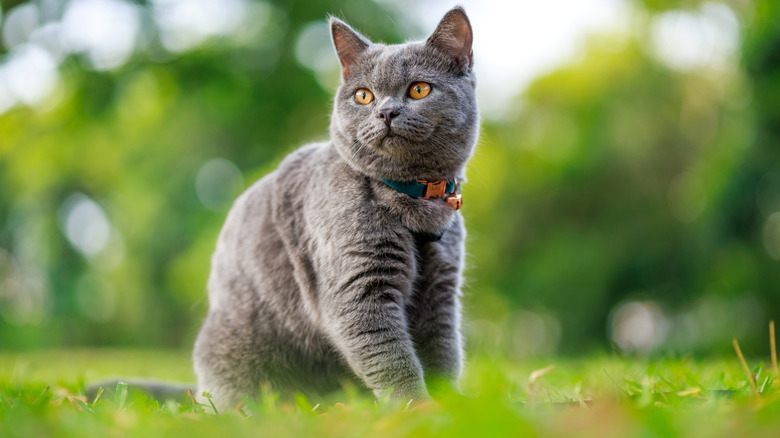
Daddy-O is one impressive feline. Though he found a new forever home, he seemed to thrive quite well outdoors. So, when is it best to leave cats inside versus outside? Well, cat owners tend to have either fully indoor cats, outdoor cats that stay outside, or cats who can freely roam inside and outside. Notably though, indoor cats tend to have longer life spans than their counterparts, due to a lower risk of disease and injury than when living outside.
However, free-roaming cats with owners might be safer in more rural areas, with more frequent vet visits, or with an outdoor cat house. Also, it's important to note that, like Daddy-O, not all stray cats are feral. Unlike stray cats, feral cats aren't socialized to be around people, and may not appreciate living indoors. Instead, shelters often Trap-Neuter-Return (TNR) feral cats so they can roam safely without carrying disease or overcrowding, because unfortunately, science says cats are one of the world's most invasive species.
Along with carrying disease, outdoor and feral cats are major predators of wildlife, including birds and small reptiles and amphibians. So, while your cat may love the great outdoors, it may be worth it to consider transitioning them inside. Just make sure you can offer a lot of sunlight, climbing spaces, and play to keep your feline happy.