

Shih-Poo Tries To Hide Under A Blanket From Mom But Can't Stop Wagging His Tail
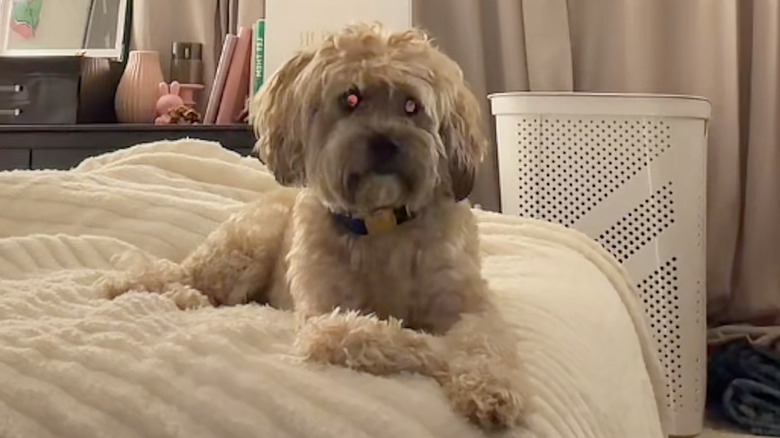
Not everyone likes to let pets have the run of the house, but when you're living under someone else's roof, sometimes you try to skirt around the rules — the way this human and her dog have attempted to. Of course, an attempt is only as good as the dog's ability to not involuntarily wag its tail here!
@prexity_ he can't resist the tail wag 😭 #dog
♬ [Raw recording] Record playback noise 01 (3 minutes) – Icy Light
In the TikTok video, an annoyed mother comes upstairs to discover Alfie, a shih-poo dog, is not only upstairs but also seemingly hiding under the covers on the bed. Of course, the daughter tries to play it off as if there's nothing to see, when indeed there very much is — as the dog can't resist wagging its tail when mom comes to check out the bed lump.
In the comments, people couldn't resist cracking jokes at the silly dog's expense, with one saying, "He's probably like 'I'm probably doing such a good job.'" Meanwhile, another assumes, "He's giggling under there lol." Hey, at least he tried!
Can dogs control their tail wags?
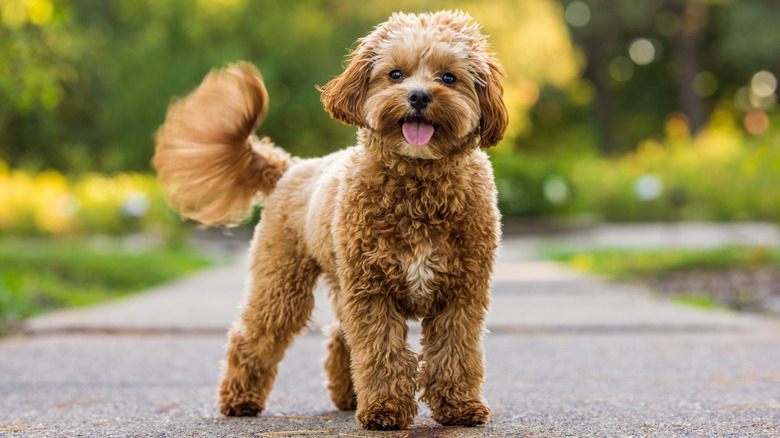
Can dogs actually control their wagging tails, or are they just along for the ride? The answer is a little bit of both. Dogs have muscles and nerves that allow them to move their tails intentionally, meaning they can purposefully raise and lower them, but many tail wags happen automatically in response to emotions.
Think of a tail wag as a combination of body language and emotional reflex. A dog might spot their favorite person and immediately start wagging before they even realize what's going on. So, while dogs can control the movement itself, they aren't necessarily thinking, "Time to wag my tail!" The emotion often comes first, and the tail follows.
That's where things can get confusing, as a tail wag doesn't always mean a dog is happy — but that tail wagging is still telling you something. It can also happen when a dog is nervous, afraid, or even just curious, with the speed, stiffness, and overall movement providing clues about how it is feeling. For example, a loose, sweeping wag may accompany friendly playfulness, while a stiff and low wag can signal uncertainty or tension. So yes, dogs can control their tails, but sometimes their emotions are in the driver's seat!