

Baby Pangolin Born In Chicago Zoo Is Melting Hearts & Progressing The Species' Conservation Efforts
Ever heard of a pangolin? If not, we're here to tell you they're fascinating. And, unfortunately, endangered. They're anteater-like mammals covered almost entirely with scales that are found almost exclusively in Asia and Africa and are sadly one of the most poached animals on earth. The Brookfield Zoo in Chicago is trying to combat all that by breeding baby pangolins in an effort to progress the species' conservation efforts and help the endangered species make a miraculous comeback à la the western quoll and the brushtail possum.
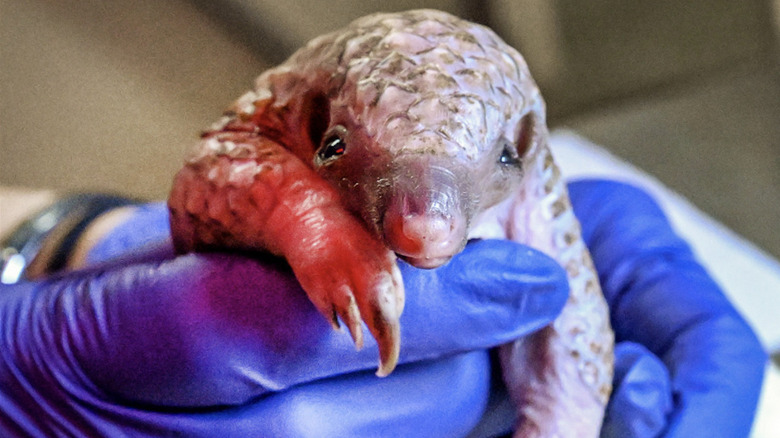
In an X post, the zoo shared a pic of a baby pangolin born at their facility, stating, "We're excited to announce that another pangolin baby was born earlier this year! Born on June 8 to mom, Virginia, this tiny female pangolin is growing bigger every day!" In the image, the baby fits in a caregiver's hand, looking a lot like a small, hairless anteater. "When baby pangolins (pangopups) are born, they have soft, pale scales that harden after a few days," adds the post.
While one person posted "aww" in the comments section, at least two others referenced dinosaurs when it came to the baby's appearance. They aren't wrong, which is one of the many reasons we should do everything we can as a society to save these precious creatures.
Fun facts about pangolins
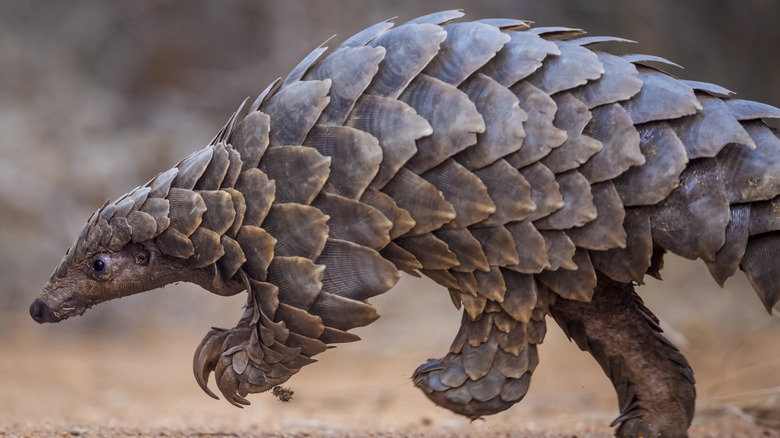
While pangolins may not be as well publicized as axolotls or capybaras on social media these days, they are no less fascinating and cute in their own unique way. Like, did you know that they are the only mammals on the planet that are completely covered in scales? Yup, and those scales are made of keratin, the same building block that makes up human fingernails and toenails.
While they don't have teeth, they do have a long, sticky tongue that helps them eat up to 70 million — yes, million — insects, especially ants and termites, a year! Since they are toothless, they also need to consume tiny stones and sand to help grind up food in their bellies.
A pangolin's main defense against predators is curling up into a tight ball, making its tough scales almost impossible to bite or claw through. Unfortunately, this defense doesn't work against human hunters who kill and traffic the creature for meat and unfounded medicinal purposes. Luckily, organizations like the Brookfield Zoo and countries like Taiwan, which has the highest pangolin density in the world, are stepping up species recovery initiatives in an effort to save these unique beings! Want to see more cute wild animals? Check out these nearly extinct wild animals that are making a comeback, thanks to conservation.