

Dachshund Puppy Has 'Matching Spots' With His Bambi Stuffie And We Can't Handle It
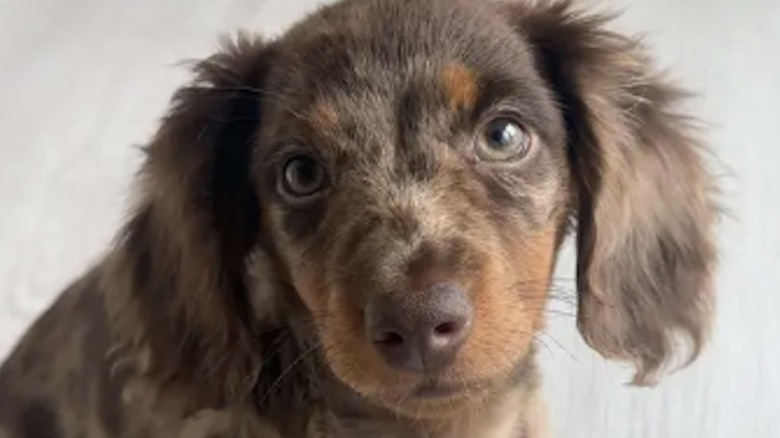
All dogs are cute in their own special way, but some take it to the next level. Take, for example, this miniature long-haired dapple dachshund named Ralphie. He almost matches his favorite stuffy in this sweet, simple TikTok video that we're not sure we can handle right now. Yes, the twinning is strong with these two!
@ralphie.rue Matching spots with Bambi #dachshund #puppy #dogsoftiktok #weeniedog #dachshundsoftiktok
Simply titled "Matching spots with Bambi" and set to light, dreamy music, the tiny doxie is seen alongside a comparably spotted stuffed animal from Disney's "Bambi" to show off their similarities, and it's easy to see why viewers might not be able to get enough.
"Awwww so cuteeeee," stated one person in the comments section, as others dropped hearts and smiling face emojis to show their love for the precious video. It's the kind of simple social media content that's impossible to scroll past without stopping for at least one quick look at this cute little duo.
How do dogs get spots?
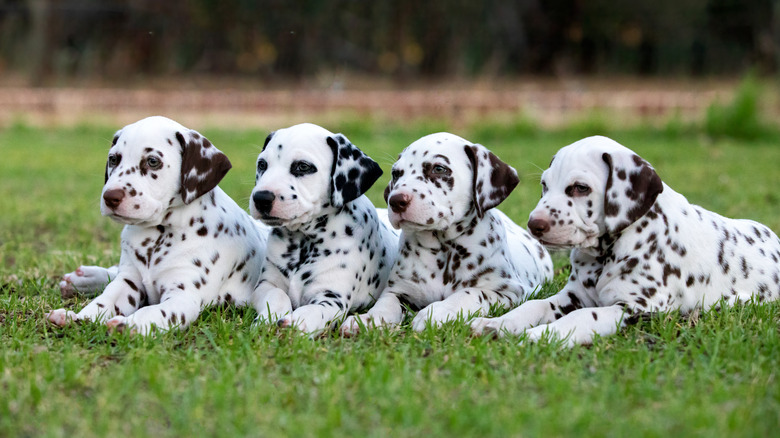
There are all kinds of dog coats and colors. Some dogs are solid (like chocolate labs), and some are mottled or brindle (like Australian cattle dogs and boxers). Plenty have what people would refer to as spots, including dapple dachshunds and purebred Dalmatians. But how exactly do dogs get their spots?
In a nutshell, dogs have spots due to their genes. A dog's coloring comes from melanin, the pigment responsible for dark colors like black, brown, and gray. When those pigment-producing cells are distributed unevenly during development, certain areas of fur can stay lighter, creating spots. From there, many spotted patterns are linked to specific sections of the gene, and these traits are then passed down through generations, creating looks like the famously black-and-white spotted Dalmatian.
Humans have also played a role in creating and preserving certain spotted looks by selectively breeding dogs with desired coat patterns. Still, the actual markings themselves are in no way "controlled," as even puppies from the same litter don't always look like their parents and can have very different patterns depending on which coat-color genes they each individually inherit. That's why dogs can end up with anything from big, bold patches to tiny speckles to completely unique and rare coats that will take your breath away. Call it a little touch of genetic magic.